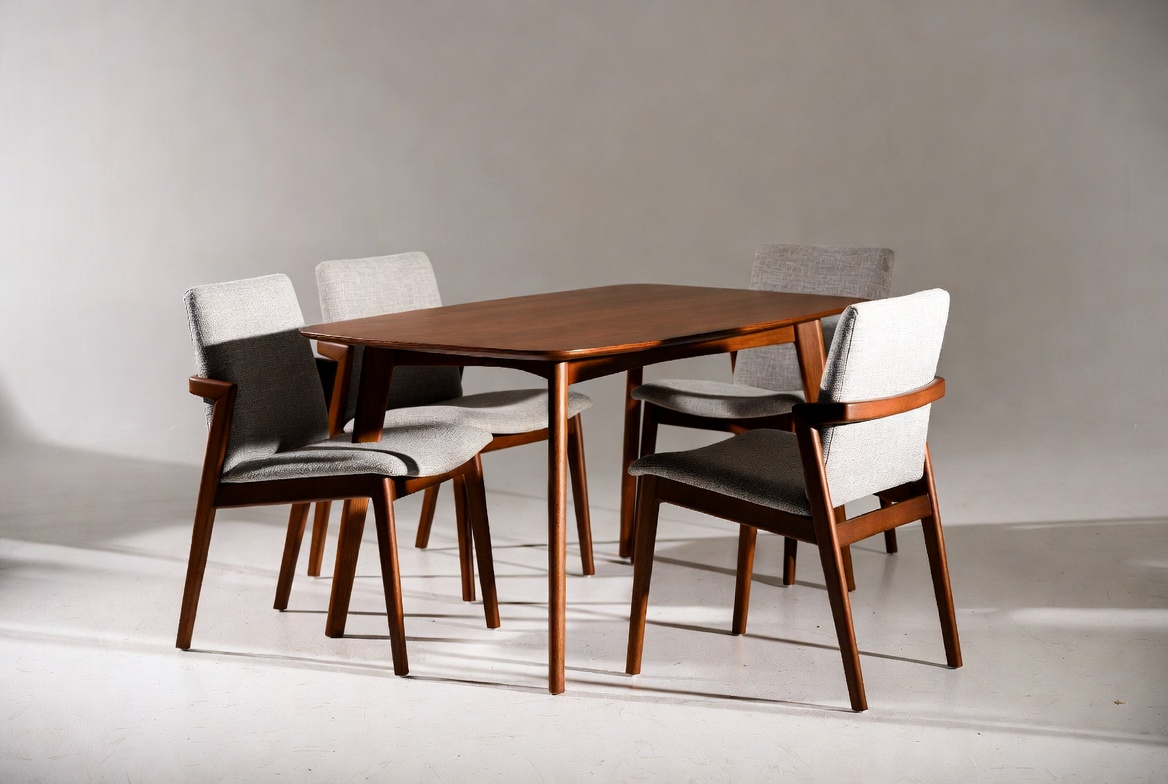
How Much Room for Dining Table and Chairs: A Complete Space Planning Guide
When you’re setting up your dining area, one of the biggest questions you’ll face is figuring out just how much space you actually need. It sounds simple enough, right? But the truth is, getting this calculation wrong can make your dining room feel cramped, awkward, or even unusable. I’ve seen plenty of people squeeze a massive table into a modest space only to realize they can barely pull out their chairs. On the flip side, I’ve watched others leave their dining areas feeling cavernous because they didn’t account for proper proportions.
The good news? This guide is going to walk you through everything you need to know about spacing for your dining table and chairs. Whether you’re renovating a small apartment, designing a family home, or simply rearranging your current setup, understanding these principles will help you make smarter decisions.
Understanding the Basics of Dining Room Space Planning
Before we dive into the nitty-gritty numbers, let’s talk about why space planning matters at all. Your dining room isn’t just a place where you eat—it’s where memories happen. Family conversations, celebrations, and everyday moments all unfold around that table. If the space is uncomfortable or poorly proportioned, you’re not going to enjoy spending time there, and honestly, people will avoid sitting down for meals altogether.
Think of dining room planning like choreography. Everyone needs room to move, sit, and interact without bumping into each other or furniture. You need clearance for chairs to pull out, space for servers to move around, and enough breathing room so the entire setup doesn’t feel like a pressure cooker.
Why Measurements Matter More Than You Think
I know—measurements can seem boring and overly technical. But here’s the thing: when you get the dimensions right, you don’t have to think about them anymore. The space just works. You walk in, sit down, and everything feels natural. When measurements are off, you’re constantly aware of the awkwardness. Your knees hit the table. You can’t fully extend your chair. Guests feel cramped. These small frustrations add up quickly.
The Golden Rule: Minimum Clearance Around Your Table
Let’s start with what I call the golden rule of dining room spacing. You’ll want at least 36 inches of clearance on all sides of your dining table. This is the distance from the edge of the table to the nearest wall or furniture piece. Why 36 inches? Because that’s roughly the space you need to comfortably pull out a chair and stand up without feeling like you’re doing gymnastics.
Now, if you have a smaller space or you’re really tight on room, you can technically get away with 30 inches as an absolute minimum. But trust me—36 inches is where things start to feel genuinely comfortable. It’s the difference between a space that works and a space that feels constraining.
What About Chairs? How Much Space Do They Actually Need?
Here’s something most people don’t consider carefully enough: a dining chair doesn’t end where its backrest does. You need to account for the space a chair takes up when someone is actually sitting in it. A typical dining chair, when fully pulled out for someone to sit comfortably, needs about 18-20 inches of depth from the table edge.
So if you have a 36-inch clearance and someone sits in a chair, they’re using about 18-20 inches of that space. This leaves you with about 16-18 inches behind the chair for walking and moving around. It’s tight, but workable.
Calculating Room Requirements by Table Size
Different table sizes have different space requirements. Let me break this down for you so you can match it to whatever size table you’re considering.
Small Tables: 36 to 48 Inches Long
Small dining tables, typically 36 to 48 inches in length, work best in rooms that are at least 9 feet by 9 feet. These tables usually accommodate two to four people comfortably. With the 36-inch clearance rule applied on all sides, you’re looking at a minimum room footprint of about 108 to 120 square feet dedicated to the dining area.
These tables are perfect for apartments, small homes, or dedicated dining nooks. They create an intimate setting without consuming your entire living space.
Medium Tables: 48 to 60 Inches Long
Medium-sized tables are the sweet spot for many households. They seat four to six people and need a minimum room size of around 10 feet by 12 feet. This gives you comfortable clearance on all sides and room for people to move about without feeling crowded.
These tables strike a nice balance. They’re substantial enough to feel like a proper dining space, but they don’t dominate smaller homes or open floor plans.
Large Tables: 60 to 72 Inches or Longer
Large tables are for people who entertain frequently or have bigger families. You’ll want a room that’s at least 11 feet by 14 feet, though larger is even better. These tables can seat six to eight people comfortably and create a real gathering space.
If you have an even larger table beyond 72 inches, you’re probably looking at a dedicated formal dining room. The space requirements grow proportionally, and you want enough room that your guests don’t feel like they’re sitting in a tight squeeze.
Rectangular vs. Round Tables: How Shape Affects Your Space Needs
Here’s something interesting that trips up a lot of people: the shape of your table actually changes how much space you need.
Rectangular Tables and Space Efficiency
Rectangular tables are champions of space efficiency. They make excellent use of elongated rooms and fit naturally against walls if needed. A rectangular table also makes it easier to seat more people without the table feeling too wide. People can reach across to pass dishes, and the shape just feels logical in most floor plans.
When calculating clearance for rectangular tables, remember that you need 36 inches from the short ends and the long sides. This is straightforward to visualize and plan for.
Round Tables: The Gathering Alternative
Round tables create a different dynamic. Everyone has equal sightlines—there’s no head of the table. They’re excellent for conversation and creating intimacy. However, they’re less space-efficient than rectangular tables of similar capacity.
A 48-inch round table needs roughly the same clearance as a 48-inch rectangular table, but it takes up more of your room’s floor space because of its width. Round tables also don’t fit well against walls, so you typically need to position them in the center of your dining area, which requires more total room footage.
Square Tables: The Flexible Middle Ground
Square tables offer a nice compromise. They work well in smaller spaces, create good conversation distances, and can fit into corners better than round tables. A 36-inch to 42-inch square table can comfortably seat four people and fits nicely in modest dining areas.
Don’t Forget About Seating: Chair Clearance Explained
Now let’s talk specifically about chairs, because they’re where a lot of people’s space calculations go wrong.
Standard Chair Dimensions
A typical dining chair is about 18 inches wide and extends about 18-20 inches from the table edge when occupied. Some chairs, particularly armchairs, can be wider—up to 24-26 inches. This matters when you’re planning how many chairs fit around your table.
If you have a 48-inch table and you’re planning to put chairs on the short ends, you can typically fit one chair per end (since most chairs are 16-18 inches wide). Along the longer sides, you might fit 1-2 chairs per side depending on the exact dimensions.
Walking Space Behind Chairs
Here’s the detail that makes or breaks comfort: the space behind chairs when they’re pulled out. As I mentioned earlier, you want about 16-18 inches of walking space minimum behind each chair. This allows servers to move around the table, and it keeps the space from feeling claustrophobic.
If you’re pinched for space, you can reduce this to 12 inches temporarily, but it will feel tight. For regular daily use, aim for 18 inches or more.
Open Floor Plans: Special Considerations for Modern Homes
Many modern homes feature open floor plans where the dining area connects directly to the kitchen and living room. This changes how you calculate space because you’re not dealing with an isolated dining room anymore.
Defining Your Dining Zone
In an open floor plan, your dining area becomes one zone within a larger space. You still want that 36-inch clearance rule, but think of it as creating a defined dining zone that flows naturally with the rest of the space.
One trick I’ve seen work well is positioning your dining table so that people can move from the kitchen to the living room without having to squeeze past chairs. If you have about 48 inches of passage space on one side of your table, traffic can flow naturally without the dining area blocking everything else.
Furniture Placement in Open Concepts
When you don’t have walls defining your dining room, be intentional about what surrounds your table. A buffet or sideboard on one side, seating area adjacently, and clear passage on at least one side creates a balanced, functional dining zone within your larger space.
Making Measurements in Your Actual Space
At this point, you understand the principles. But how do you actually measure your space and make sure it all works? Let me walk you through the practical process.
Step-by-Step Measurement Guide
- First, measure your entire room length and width in feet. Jot these down.
- Identify where you want your table positioned. Mark this spot.
- Measure from the proposed table position to walls, windows, doors, and other fixed furniture on all sides.
- Subtract 36 inches (3 feet) from each direction. What’s left is your available table size.
- Consider doorways and traffic paths. Make sure your table placement doesn’t block main routes through the room.
- Account for radiators, vents, or architectural features that might restrict placement.
Using Templates and Cutouts
One of the best tricks I’ve learned is creating paper templates of your table and chairs to scale. Graph paper works great—use one square to represent one foot. Cut out your table dimensions and chair shapes, then arrange them in your room’s scaled layout. This lets you visualize exactly how everything fits before you commit to buying furniture.
Special Situations: Apartments, Small Homes, and Tight Spaces
Not everyone has a sprawling dining room, and that’s completely fine. You can absolutely have an effective dining space in a small footprint if you’re strategic.
Dining Nooks and Corner Setups
Corner dining nooks are fantastic for small spaces. By positioning your table in a corner, you eliminate the need for clearance on two sides. You can fit a bench on two sides and chairs on the open sides, creating a cozy, space-efficient setup. Just remember that people sitting on the bench still need to be able to get out comfortably—don’t trap them.
Expandable Tables for Flexibility
Extension tables are game-changers for small spaces. You get a compact table for everyday use, and when you need to entertain, it expands to seat more people. Just make sure you have the room to fully expand it and still maintain reasonable clearance. There’s no point having an extension table if you can’t actually extend it without everyone being crammed together.
Multifunctional Spaces
In really tight spaces, your dining table might also serve as a work surface, homework station, or even a workspace for hobbies. If that’s your situation, make sure the size and placement support all these functions. You might need slightly different clearance considerations depending on what else the table does.
Common Mistakes People Make (And How to Avoid Them)
After talking with countless people about their dining setups, I’ve noticed some patterns in where folks go wrong.
Buying the Table First, Measuring the Space Second
This is perhaps the most common mistake. People fall in love with a beautiful table, buy it, and then try to fit it into their space. Do the opposite—measure your space first, understand your constraints, then shop for a table that fits. You’ll be much happier with the result.
Ignoring the Impact of Room Shape
A long, narrow dining room needs different planning than a square one. Don’t just look at total square footage; consider how your actual room dimensions affect table placement and circulation.
Underestimating Chair Width and Depth
Armchairs are beautiful but they’re wider than standard side chairs. Upholstered chairs take up more space than wood chairs. Account for the specific chairs you’re considering, not generic average measurements.
Forgetting About Lighting and Windows
Where you position your table affects how natural light reaches your space and where you’ll need artificial lighting. Position your table so it takes advantage of windows without creating glare, and ensure you have room for overhead lighting or a chandelier above the table.
Testing Your Setup Before Committing
Here’s a practical tip: before you buy anything, test your layout with tape on the floor. Use painter’s tape to outline where your table will go and mark where each chair will sit. Walk around it. Pretend to sit down. Push chairs back. See how it feels with actual movement and body. This costs nothing and prevents expensive mistakes.
Some people even go as far as renting furniture temporarily or borrowing a friend’s table that’s similar in size. There’s no substitute for actually experiencing how a setup works in your space.
The Psychological Impact of Properly Spaced Dining Areas
You know what’s interesting? The spacing of your dining area actually affects how people behave and feel when they’re there. Too cramped, and people rush through meals. Too spacious, and there’s no sense of intimacy or gathering. Get it right, and people naturally linger longer, enjoy meals more, and engage in better conversation.
Properly spaced dining areas also feel cleaner and less chaotic. Your room appears larger and more organized. There’s a psychological ease that comes from having just enough—not too little, not excessive.
Final Adjustments: Fine-Tuning Your Dining Space
Once your basic dimensions work, there are several adjustments you can make to optimize your dining area further.
Height Considerations
Standard dining table height is 30 inches from floor to table surface. Chairs should be about 18 inches high at the seat. This creates a comfortable 12-inch lap space. Make sure your table height matches your chairs properly—this detail matters more than most people realize.
Rug Placement
A dining room rug should anchor the entire setup. Ideally, it should extend at least 24 inches beyond the table on all sides, or enough that the front legs of all chairs sit on the rug when pulled out. This visually and physically defines your dining zone.
Lighting Positioning
A chandelier or pendant light above your table should hang about 30-36 inches above the table surface. This height keeps it from casting shadows on diners’ faces while still illuminating the table well. Make sure you have enough clearance that tall guests don’t accidentally bump their heads.
Conclusion
Getting the