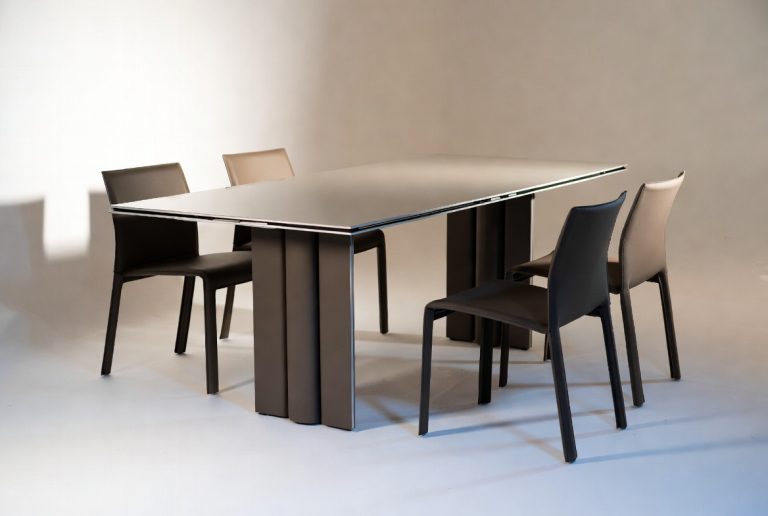
Comfort First: How Much Space Between Chairs at a Dining Table?
Have you ever sat down at a dining table and felt uncomfortably squeezed next to someone else? Or perhaps you’ve hosted a dinner party where guests seemed reluctant to pull their chairs in fully? The spacing between chairs at your dining table is more important than you might think. It’s not just about fitting more people around the table—it’s about creating an environment where everyone can eat, converse, and enjoy their meal without feeling cramped or awkward.
In this comprehensive guide, we’ll explore everything you need to know about proper chair spacing at a dining table. Whether you’re setting up your first apartment, redesigning your dining room, or planning a special event, understanding these principles will help you create a comfortable and functional dining space.
Why Chair Spacing Matters More Than You Think
Think about the last time you attended a formal dinner or a casual meal with friends. What made the experience pleasant or unpleasant? Beyond the food itself, the physical comfort of your seating plays a tremendous role. When chairs are spaced too closely together, diners become tense. Their elbows bump into their neighbors, they can’t fully pull their chair under the table, and conversations feel intrusive rather than intimate.
The Psychology of Personal Space at the Dining Table
Personal space is a fascinating aspect of human behavior. We all have an invisible bubble around us, and when someone invades that space without permission, we feel uncomfortable—even if we can’t articulate exactly why. At a dining table, this becomes particularly relevant because eating is an intimate act. We’re vulnerable when we’re eating, and we need to feel secure in our immediate surroundings.
Proper spacing allows diners to maintain their sense of personal space while still feeling connected to their tablemates. It’s the sweet spot between isolation and intrusion, and getting it right can transform a meal from merely functional to genuinely enjoyable.
Ergonomic Benefits of Correct Spacing
Beyond psychology, there are real ergonomic advantages to proper chair spacing. When you have enough room between yourself and the person next to you, you can:
- Eat with proper posture without twisting your body
- Use utensils freely without fear of bumping elbows
- Push your chair in and out smoothly without disturbing neighbors
- Have comfortable access to your plate and drinking glass
- Rest your arms comfortably on the table
Standard Measurements: The Golden Rule of Chair Spacing
The 24 to 30-Inch Standard
Interior designers and furniture manufacturers have settled on a generally accepted standard: chairs should be spaced 24 to 30 inches apart, measured from the center of one seat to the center of the next seat. This measurement is taken horizontally along the table.
Why this specific range? Well, the average person’s shoulders are about 16 to 18 inches wide. When you add the depth of the chair back and the slight overhang of the seat, you’re looking at roughly 20 to 22 inches for the chair itself. The remaining 4 to 8 inches provides comfortable elbow room and allows for natural movement without collision.
Clearance Around the Table: The 36-Inch Rule
But spacing between chairs is only half the equation. You also need adequate clearance around the entire table. Most experts recommend maintaining at least 36 inches of space between the edge of the table and any wall, furniture, or obstacle. This distance allows someone to comfortably pull their chair back and stand up without squeezing past the furniture.
In tighter spaces, you might reduce this to 30 inches if absolutely necessary, but this will make the dining experience less comfortable, especially for guests who might need extra maneuvering room, such as elderly people or those with mobility concerns.
How Table Shape Influences Chair Placement
Rectangular Tables: The Most Flexible Option
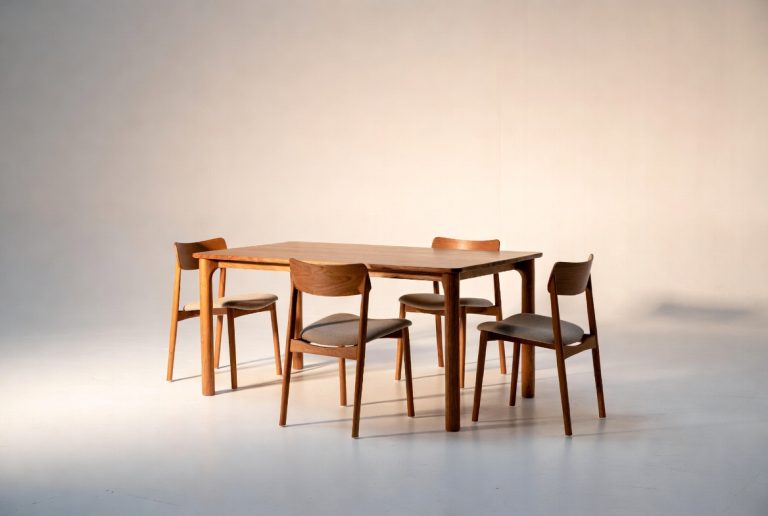
Rectangular tables are the most common dining table shape, and they’re wonderfully versatile when it comes to seating. Along the long sides, you can typically fit one chair every 24 to 30 inches. At the head and foot of the table, you’ll usually place a single chair centered on each end.
For example, a standard six-person rectangular table measuring 36 inches wide by 60 inches long typically has two chairs at the ends and two chairs along each long side. This arrangement provides comfortable spacing while maximizing the number of seats.
Round Tables: The Intimate Arrangement
Round tables have their own spacing logic. Because you’re measuring around a circle, the math works a bit differently. For a round table, you’ll measure the arc length available and divide by the standard 24 to 30-inch spacing.
A 48-inch diameter round table, for instance, has a circumference of about 150 inches. This works out to roughly 5 to 6 comfortable place settings. A 60-inch round table can accommodate 8 to 10 people with proper spacing. Round tables have the advantage of creating a more intimate, conversational atmosphere since everyone can see everyone else’s face without craning their neck.
Square Tables: A Modern Compromise
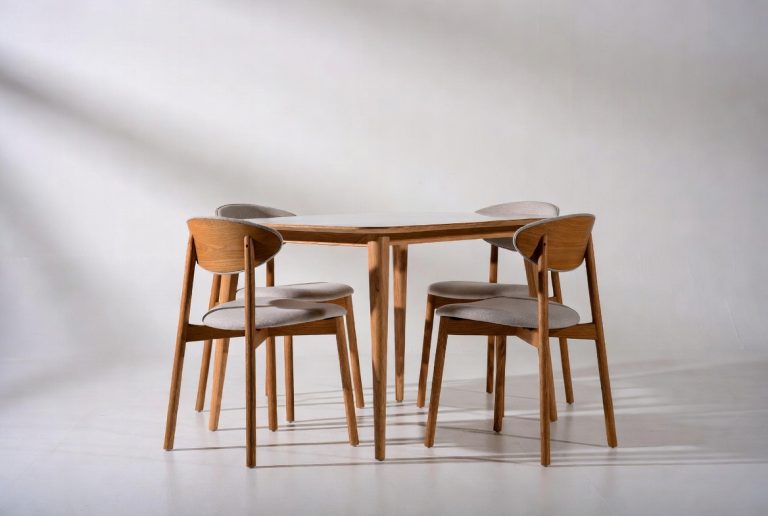
Square dining tables have become increasingly popular in contemporary homes. They work well for 4-person settings with one chair on each side. For larger square tables, you might place two chairs on each side, though you need to be careful not to compromise the 24 to 30-inch spacing standard.
Understanding Different Chair Types and Their Spacing Needs
Traditional Wooden Chairs
Classic wooden dining chairs with vertical backs typically have a depth of about 18 to 20 inches. These work well with the standard 24 to 30-inch spacing because they’re relatively compact and don’t extend far from the table edge when occupied.
Upholstered Chairs With Arms
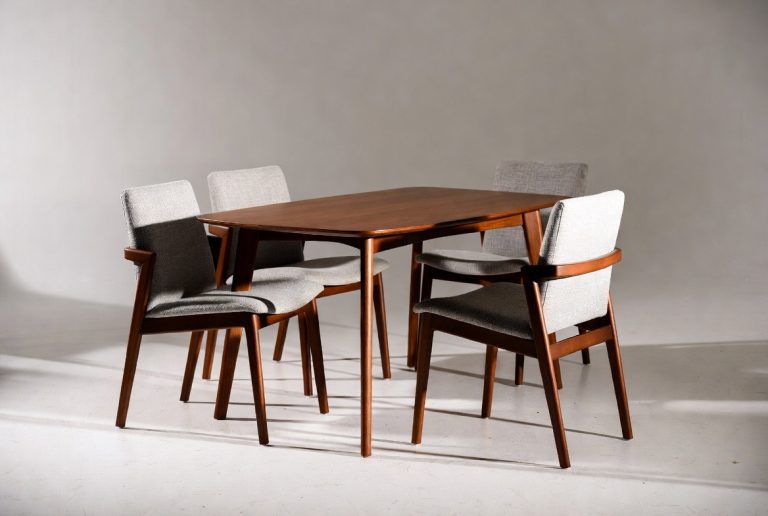
Armchairs require more consideration. With armrests, the width of the seated position increases significantly—sometimes to 28 to 32 inches per chair. This means you might need to space them 32 to 36 inches apart (center to center) to maintain comfortable elbow clearance. Armchairs make a statement and can add luxury to a dining room, but they’re definitely more demanding in terms of space requirements.
Modern Minimalist Designs
Contemporary chairs with minimal backs and no arms can be quite compact, sometimes only 16 to 18 inches wide. However, I’d still recommend maintaining the standard spacing to avoid that cramped feeling, even if these chairs technically take up less space.
Bench Seating
Benches are a different animal entirely. When using a bench on one side of a rectangular table, you have more flexibility since people aren’t as defined by individual “zones.” However, you should still aim for roughly 24 inches of space per person along the bench.
Measuring Your Space: A Practical Guide
Step-by-Step Measurement Process
Before you buy a table or arrange your chairs, take some practical measurements. Here’s how:
- Measure the length and width of your dining area
- Account for any doorways, windows, or architectural features
- Subtract 36 inches from the length and width (or 30 inches for smaller spaces) to account for clearance around the table
- The remaining space is what your table can occupy
- Once you know your table dimensions, calculate seating capacity using the 24 to 30-inch standard
The Trial Arrangement Method
Here’s a practical trick: use painter’s tape or chalk to outline your table dimensions on the floor. Then, place chairs around this outline using your desired spacing. Actually sit in the chairs. This gives you a visceral understanding of whether the arrangement works for your household. You might find that what looks good on paper feels cramped in reality, or vice versa.
Special Considerations for Different Dining Situations
Family Dinners With Children
If you’re dining with young children, you might want to increase your spacing slightly. Kids are unpredictable—they wiggle, they shift positions, and their elbows seem to fly in all directions. Adding a couple of extra inches of clearance can prevent a lot of bumping and the minor frustrations that come with it.
Formal Dinner Parties and Events
When hosting formal dinners, you might actually want to increase spacing beyond the minimum standard. Formal dining is a more elaborate affair, with multiple courses, various glasses and utensils, and perhaps dishes being served and cleared throughout the meal. Giving your guests 28 to 30 inches of space, on the higher end of the standard, creates a more luxurious feel and prevents any sense of crowding.
Small Apartment Dining
Not everyone has a sprawling dining room. If you’re working with limited space, you have a few options:
- Opt for a smaller table that seats four instead of six
- Choose chairs without arms to minimize their footprint
- Use a round table, which often maximizes seating while taking up less floor space
- Consider a table with drop leaves that can be extended when needed
- Use bench seating on one side to accommodate more people in less space
Common Mistakes in Chair Spacing
The “Fitting Too Many Chairs” Trap
This is probably the most common error. Someone looks at their table and thinks, “I can probably fit another chair here.” And technically, you might be able to. But there’s a difference between fitting and comfortable seating. A table that seats six comfortably shouldn’t be squeezed to seat seven or eight. The experience will suffer noticeably.
Ignoring the Perimeter Clearance
Another frequent mistake is focusing solely on spacing between chairs while ignoring clearance around the entire table. You might have perfect spacing between chairs, but if there’s only 20 inches between the table and the wall, your guests will feel constrained when trying to sit down or stand up.
Mismatched Chair Sizes
Using chairs of different widths or depths around the same table can create visual imbalance and awkward spacing. If you’re going to mix chair styles, at least ensure they’re roughly the same size so spacing remains consistent.
Creating the Ultimate Dining Experience
Beyond Just Spacing: The Complete Picture
Proper chair spacing is foundational, but other elements contribute to a pleasant dining experience. Good lighting, appropriate table height (typically 30 inches from the floor to the tabletop), and the right ambiance all matter. Your chairs should sit about 12 inches below the table surface when someone is seated comfortably.
The Importance of Consistency
Whether you’re setting a table for daily family meals or special occasions, consistency matters. Use the same spacing guidelines each time you arrange chairs. This creates a sense of intentionality and care in your dining space.
Flexibility for Different Occasions
That said, you might adjust spacing slightly for different occasions. A casual weeknight dinner might accept slightly tighter spacing than a formal weekend entertaining scenario. The key is being intentional about these choices rather than haphazardly arranging chairs.
Optimizing Small Dining Spaces
Strategic Furniture Selection
In apartments or smaller homes, every inch counts. Consider these strategies:
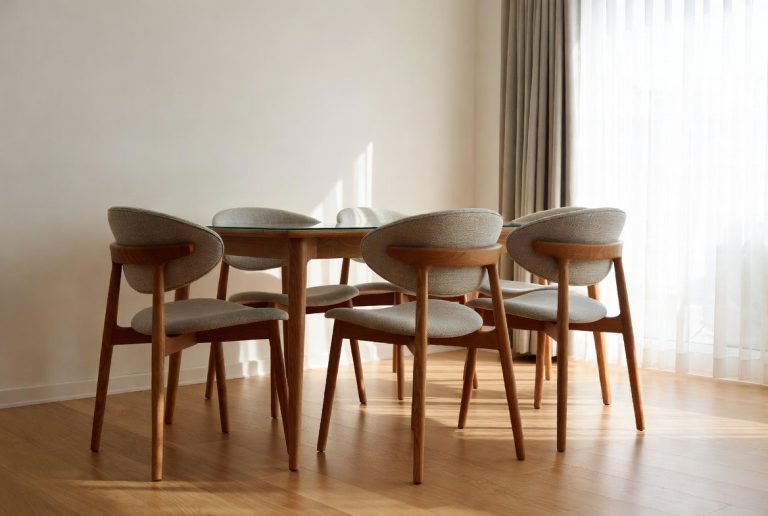
- Choose a wall-mounted or glass-top table to make the space feel less heavy
- Select chairs on legs rather than skirted chairs to maintain visual lightness
- Use chairs that tuck completely under the table when not in use
- Consider a pedestal table base, which takes up less visual space than four-legged alternatives
Multi-Purpose Dining Solutions
Some modern homes use their dining table as a workspace or craft area during the day. In these situations, you might invest in folding chairs or stackable seating that can be stored away when not needed for dining.
The Math Behind Perfect Spacing
Calculating Capacity for Different Table Sizes
Let’s walk through some real numbers. A 48-inch round table: circumference is approximately 150 inches. Divided by 27 inches (the middle of our spacing range), you get about 5 to 6 seats comfortably.
A 36×60-inch rectangular table: along the 60-inch length, you can fit approximately 2 chairs (one at each end). Along the 36-inch width, you can comfortably fit 1 chair per side. So that’s 2 + 1 + 1 = 4 chairs, or potentially a table with 6 chairs if you add one more on each long side, totaling roughly 2 + 2 + 1 + 1 = 6 chairs.
These calculations assume the standard 24 to 30-inch spacing. Adjust based on your specific chairs and comfort preferences.
Professional Design Tips From Experts
What Interior Designers Know
Professional designers approach dining room layout with a few key principles:
- They prioritize function over form—a beautiful table doesn’t matter if it’s uncomfortable to dine at
- They consider traffic flow through the space, ensuring people can move around the table easily
- They account for the dining room’s total function—not just dining, but also entertaining and socializing
- They think about sight lines and conversation, arranging seating to encourage interaction
Making Your Dining Space Work For You
Personalizing Standard Guidelines
While the 24 to 30-inch standard is a solid starting point, your personal preferences matter. If you tend to host large gatherings, you might prioritize seating capacity and accept slightly tighter spacing. If you dine in small groups, you might prefer more generous spacing for an intimate feel.
Testing Your Arrangement
The absolute best way to determine if your spacing works is to actually use it. Invite friends over, or have several family meals using your planned arrangement. Pay attention to how it feels. Are people comfortable? Can they move freely? Is conversation flowing naturally? Your answers to these questions matter more than any rule of thumb.
Conclusion
The question of how much space to leave between dining chairs isn’t trivial—it’s fundamental to creating a dining space where people genuinely want to linger. The standard recommendation of 24 to 30 inches between chair centers, combined with at least 36 inches of clearance around the table perimeter, provides an excellent foundation for comfortable dining.