How Much Space for Dining Room Table and Chairs: The Complete Guide to Perfect Dining Room Layout
When you’re planning your dining room, one of the biggest questions you’ll face is figuring out exactly how much space you actually need for your table and chairs. It’s not as simple as just measuring your room and picking the first table you like, right? There’s actually a science to this, and getting it wrong can turn your beautiful dining space into an awkward, cramped nightmare where guests can barely pull out their chairs.
I’ve watched so many people struggle with this decision, and I want to help you avoid those painful mistakes. In this guide, we’re going to walk through everything you need to know about spacing, measurements, and creating a dining room that’s both functional and comfortable for your family and guests.
Understanding the Basics: Why Space Matters in Your Dining Room
Think of your dining room like a dance floor. You don’t want your dancers bumping into each other, and you definitely don’t want them tripping over furniture. The same principle applies to your dining room. When you have the right amount of space around your table and chairs, people can move freely, sit comfortably, and actually enjoy their meal without feeling like they’re in a sardine can.
Poor spacing can create a domino effect of problems. Guests feel uncomfortable. People can’t pull their chairs back when they want to stand up. Serving food becomes a wrestling match. And honestly, nobody’s going to want to come back for dinner if they’re constantly battling furniture.
The Golden Rule: Standard Clearance Distances You Need to Know
Interior designers have established some pretty solid standards for dining room spacing, and these aren’t just arbitrary numbers. They’re based on how human beings actually move and function in spaces. Let me break down the most important measurements for you.
The Magic Number: 36 to 42 Inches Around Your Table
This is probably the most critical measurement you need to remember. Between the back of your dining chairs and any wall, cabinet, or other furniture, you need at least 36 inches of clearance. That’s three feet. In an ideal world with plenty of space, you’d aim for closer to 42 inches. This distance gives people room to push their chairs back, stand up, and move around without feeling cramped or rubbing against the wall.
Think about the last time you sat at a dining table where your chair was too close to a wall. You remember that feeling of being trapped, right? That’s exactly what we’re trying to prevent here.
Chair-to-Chair Space: Don’t Forget About Your Guests
Beyond just the distance from the table to the wall, you also need to consider the space between individual chairs. Most design experts recommend leaving at least 12 inches between the edges of adjacent chairs when they’re pulled up to the table. This might seem like a lot, but it prevents that uncomfortable shoulder-to-shoulder dining experience that makes everyone tense.
Measuring Your Dining Room: A Step-by-Step Approach
Before you even think about shopping for a table, you need to accurately measure your space. Here’s how to do it properly.
Step One: Know Your Room Dimensions
Start by measuring the length and width of your dining room. Use a tape measure and write down these numbers clearly. If your dining room has an irregular shape, break it down into sections. For example, if there’s an alcove or a protruding wall, measure that separately so you have a complete picture of what you’re working with.
Step Two: Account for Permanent Obstacles
Walk around your dining room and identify anything that’s not going anywhere. That fireplace in the corner? It’s staying. The archway that leads to the kitchen? Permanent. The windows on the far wall? You can’t move those either. These fixed elements significantly impact how much usable space you have for your dining setup.
Measure the distance from your walls to these permanent features. If you have a serving buffet or built-in cabinetry, note those measurements too.
Step Three: Calculate Your Usable Space
Now here’s where things get practical. Take your room dimensions and subtract the clearance space you need around the perimeter. Remember that 36 to 42 inches you need around your table? Start with those numbers when you’re calculating what size table will actually work in your space.
Quick Calculation Example
Let’s say you have a dining room that’s 12 feet by 14 feet. That’s 144 inches by 168 inches. If you need 36 inches of clearance on each side, you’d subtract 72 inches from the length and 72 inches from the width. That leaves you with 96 inches by 72 inches of space for your actual table. That’s 8 feet by 6 feet, which is a comfortable size for a modest dining table.
Table Sizes and Their Space Requirements
Now that you understand the spacing principles, let’s talk about specific table sizes and how much room they actually need.
Small Round Tables: Perfect for Intimate Spaces
A round table with a 36-inch diameter is about as small as you’d want to go if you’re seating a family. These tables need about 6 feet by 6 feet of total space including the clearance around them. Round tables are fantastic because they promote conversation and don’t have corners that jut out awkwardly.
If you go slightly larger with a 42-inch round table, you’re looking at needing about 7 feet by 7 feet of space. These can comfortably seat four to six people depending on your chair design.
Rectangular Tables: The Space Maximizers
Rectangular tables are the workhorses of dining rooms because they’re incredibly practical. A standard 36-inch by 60-inch table is a great choice for many homes. With proper clearance, this table needs about 6 feet by 8 feet of total space. You can typically seat six people comfortably around this size.
If you want something larger, a 36-inch by 72-inch table is a popular choice that seats up to eight people. For this one, you’d want at least 6 feet by 9.5 feet of total space when you factor in all your clearance requirements.
Expandable Tables: The Smart Solution
Love the idea of hosting big dinner parties but don’t want to commit to a massive table year-round? Expandable tables are your answer. A table that expands from 42 inches to 54 inches doesn’t require that much additional floor space when it’s collapsed, but gives you flexibility when you need it.
Just remember that when you extend your table, you need to recalculate your clearance space. Make sure you have enough room for chairs all the way around the expanded table, or at least enough room for additional seating along the sides.
Chair Considerations: More Than Just Aesthetics
People sometimes focus so much on finding the perfect table that they overlook how important the right chairs are for spacing.
Chair Depth and Dining Room Space
Not all dining chairs are created equal. A chair with a deep seat cushion takes up more space than a slimmer design. Typical dining chairs are about 16 to 18 inches deep, but some styles can be deeper. If you’re working with a tight space, consider chairs with a more streamlined profile.
Chair Back Height and Visual Space
Chairs with tall backs can make your dining room feel more confined, even if they don’t actually take up more floor space. If you’re in a smaller room with lower ceilings, you might want to consider chairs with lower backs to maintain a sense of openness.
Upholstered Versus Wood Chairs
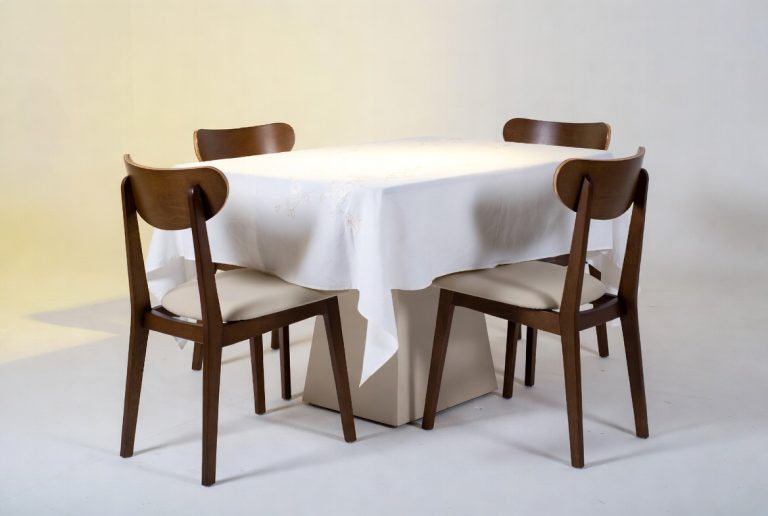
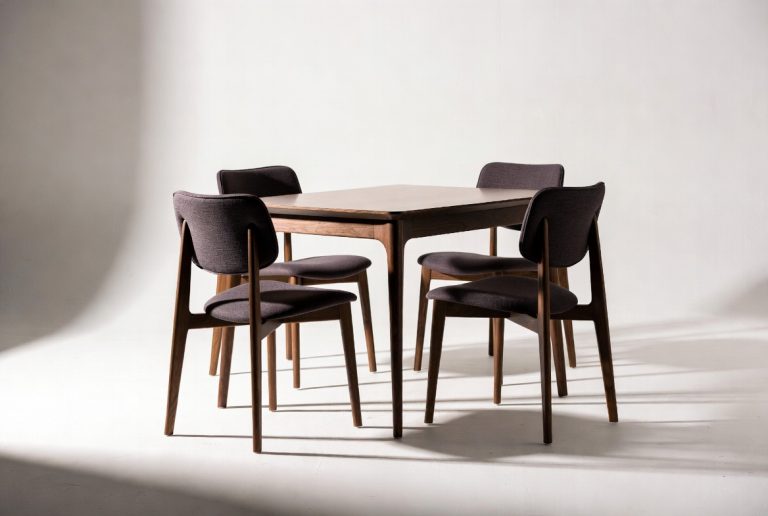
Here’s something interesting: upholstered chairs usually feel more comfortable but can visually consume more space in a room. Wood chairs with woven seats or simple backs tend to feel lighter and more open. In a compact dining room, this visual difference matters.
The Pass-Through Problem: When Your Dining Room is a Hallway
Many homes have dining rooms that also function as a pass-through to other areas. If people regularly walk through your dining space to get to the kitchen, den, or another room, you need to factor that into your planning.
You should maintain at least 36 inches of clear passage through your dining room. This means your table shouldn’t block the main walkway, and people should be able to get past seated diners without an awkward squeeze or elaborate dance moves.
If your dining room is essentially a hallway, consider placing your table off to one side rather than in the center. This preserves the traffic flow while still giving you a functional dining space.
Lighting and Ceiling Clearance: The Vertical Dimension
We’ve talked a lot about horizontal space, but don’t forget about what’s happening above your head. A chandelier or pendant light hanging over your table needs proper clearance too.
Hanging Light Fixtures
Your light fixture should hang about 30 to 36 inches above your table surface. This provides enough light without making anyone feel like they’re about to hit their head on something. If you have a particularly tall person in your household, you might want to go toward the higher end of that range.
The width of your light fixture matters too. Ideally, it should be about 12 inches narrower than your table on each side. So if you have a 42-inch round table, a fixture about 24 to 30 inches in diameter would look proportional and won’t cast weird shadows.
Traffic Flow and Door Clearance
When you’re positioning your table, think about how doors open and close in your dining room. Does the kitchen door swing into the space? Will people be opening windows or accessing closets? All of these movements need clearance.
Your table should be positioned so that no chair will be in the path of a swinging door. There’s nothing worse than someone trying to open the kitchen door and discovering a chair blocking the way. Position your table with these movement patterns in mind from the beginning.
Creating Visual Spaciousness: Design Tricks That Work
Sometimes you’re working with a smaller dining room than you’d like. The good news is that you can use design strategies to make your space feel larger than it actually is.
Choose the Right Table Shape
Round tables feel more open and spacious than rectangular ones because they have no protruding corners. Oval tables offer a nice middle ground. If you must go with a rectangular table in a small space, consider one with a narrower width to minimize the footprint.
Minimize the Visual Weight of Furniture
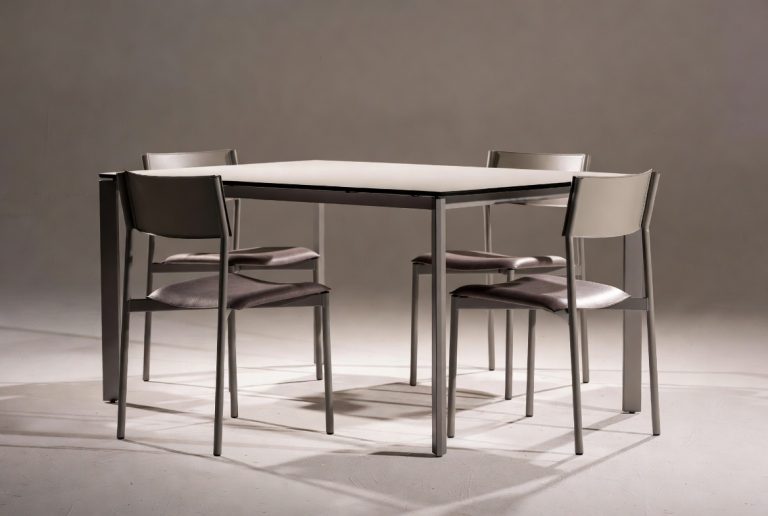
A glass or lucite table visually recedes into a space, making it feel larger. A solid wood table commands more visual weight. In a tight space, lighter-looking furniture helps create a sense of airiness.
Mirror Magic
A well-placed mirror opposite a window or light source can make your dining room feel twice as large. It bounces light around and creates the illusion of additional space. Just avoid placing a mirror directly across from your chair if you don’t want to feel like you’re watching yourself eat.
Color and Lighting Strategy
Light, neutral wall colors make rooms feel more spacious. Paired with good lighting, they open up even modestly-sized dining spaces. Dark, moody colors can make a room feel cozy but smaller.
Real-World Examples: Space Planning for Different Room Sizes
Let me walk you through some practical scenarios based on different dining room sizes.
The Cozy Dining Nook: 10×10 Feet
In a 10 by 10 foot dining room, you’re working with limited space. Your best bet is a round table no larger than 36 inches in diameter, which seats four comfortably. This setup needs about 4.5 feet by 4.5 feet of table space, leaving you 2.75 feet of clearance on all sides. It’s tight but functional, and you can seat six in a pinch for special occasions.
The Standard Dining Room: 12×14 Feet
This is probably the most common dining room size in American homes. A 42-inch round table or a 36 by 60-inch rectangular table works beautifully here. You’ll have enough space for comfortable seating for four to six people with plenty of room to pull chairs back and move around.
The Spacious Dining Room: 14×18 Feet
With this much space, you can go bigger. A 48-inch round table or a 36 by 72-inch rectangular table is ideal. You can seat six to eight people comfortably and still have plenty of clearance. If you want something even larger, an expandable table that goes from 60 inches to 84 inches gives you flexibility.
Safety Considerations: Don’t Overlook the Practical Side
Beyond comfort and aesthetics, there are genuine safety concerns with dining room spacing.
- Ensure that chairs don’t block emergency exits or fire extinguishers
- Keep at least 36 inches of clearance in front of radiators or heating vents
- Don’t position tables where they’ll interfere with ceiling fan blades or light fixtures
- Make sure electrical outlets and light switches remain accessible
- Verify that children and pets have clear movement paths around the dining area
Practical Tips for Testing Your Layout Before You Buy
Before you commit to purchasing a dining table, test your layout with a simple trick. Use painter’s tape to outline where your table will go on your floor. Make the outline the exact dimensions of your intended table. Then walk around it, pull out an imaginary chair, and see how it actually feels in your space.
You can even set up some temporary chairs around your taped outline to get a real sense of the spacing. This simple exercise prevents expensive mistakes and gives you confidence in your decision before you spend money.
Conclusion
Getting the spacing right for your dining room table and chairs is absolutely worth the time and effort. There’s nothing more frustrating than falling in love with a beautiful table only to realize it doesn’t work in your space. By following the guidelines we’ve discussed, measuring accurately, and understanding how much clearance you actually need, you can create a dining room that’s both beautiful and genuinely functional.
Remember that the standard 36 to 42 inches of clearance around your table isn’t just a design rule—it’s based on how people actually need to move and function in a space. Your dining room should be an inviting place where family and friends want to gather, and that happens when everyone has enough room to be comfortable. Take your time with your measurements, visualize your layout, and don’t rush the decision. A well-planned dining room pays dividends for years to come.
Frequently Asked Questions
What is the minimum space needed for a dining room table and chairs?
The absolute minimum you should aim for is 36 inches of clearance between the back of your chairs and any wall or obstruction. This allows people to push their chairs back and stand up without hitting something. For the table itself, a compact 36-inch round table is about as small as you’d want to go for a functional family dining space. However, comfort increases significantly when you can achieve 42 inches of clearance and a slightly larger table.
Can I fit a dining table in a 10×10 foot room?
Yes, absolutely. A 10×10 foot room works well with a 36-inch round table that seats four people comfort