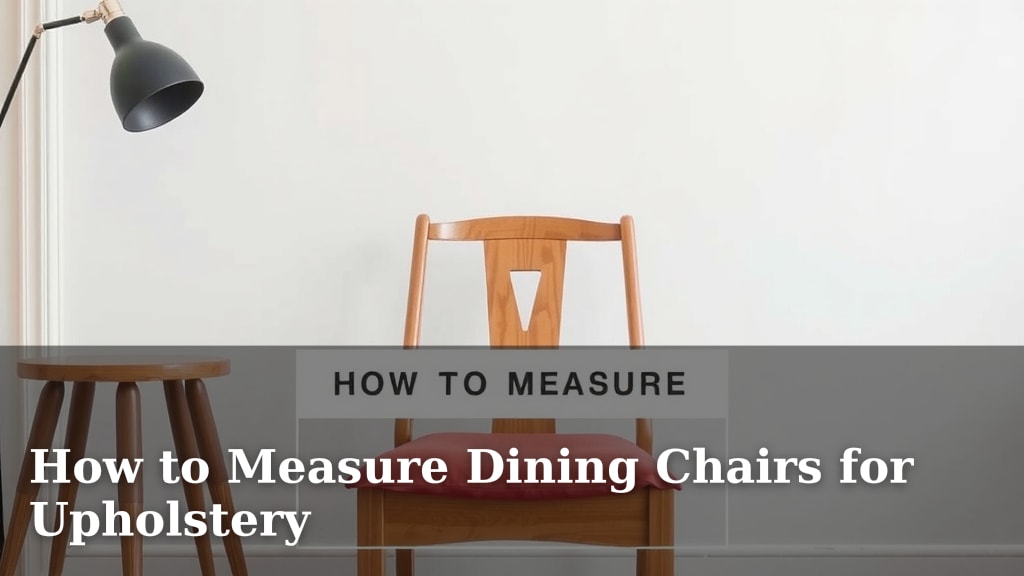
How to Measure Dining Chairs for Upholstery
Measuring your dining chairs for upholstery is simpler than you might think! You’ll need to measure the seat dimensions, the chair back height and width, and the overall chair height. Getting these numbers right ensures you buy the perfect amount of fabric for a snug, professional fit. Don’t worry, it’s not rocket science!
Getting your measurements correct is the first step to a successful DIY upholstery project. It prevents the frustration of running out of fabric or ending up with too much excess. Many upholstery guides emphasize accurate measurements as the foundation of a great result. We found that precision here saves time and money later.
- Measure your seat: length, width, and depth.
- Measure chair back: height and width.
- Measure chair height: from floor to top of the back.
- Add extra for seams and pattern matching.
- Keep a pen and paper handy!
Ready to get those numbers? Let’s walk through exactly how to measure your dining chairs step by step.
Measuring Your Dining Chairs for New Upholstery
Getting accurate measurements is the first step to a successful DIY upholstery project. It helps ensure you buy the perfect amount of fabric. This avoids the headache of running out of material mid-project. It also prevents you from having way too much leftover. We found that precision here saves both time and money later on.
The Essential Measurements You’ll Need
You’ll need to measure a few key areas of your dining chair. Think of it like taking the chair’s vital stats. We’ll cover the seat, the back, and the overall height. Having these numbers ready makes choosing your fabric much easier.
Measuring the Dining Chair Seat
The seat is the most prominent part you’ll be reupholstering. Accurate seat measurements are critical. They determine the main piece of fabric you’ll need.
Seat Width and Depth
First, measure the width of the seat. Go from the widest point on one side to the widest point on the other. Next, measure the depth. Start at the front edge and go straight back to the back edge of the seat cushion. Try to keep your tape measure nice and straight for the most accurate reading.
Seat Thickness
You’ll also need to know the thickness of the seat cushion. Measure from the very top of the cushion down to where it meets the seat frame. This measurement is important, especially if your cushion is very thick or has a plush, rounded top. We found that a thicker cushion needs a bit more fabric to wrap around it neatly.
Measuring the Dining Chair Back
The chair back is another area that requires careful measurement. This section often has its own unique shape.
Chair Back Width
Measure the width of the chair back. Again, find the widest point. Measure from one outer edge to the other. Some chair backs are wider at the top than at the bottom, so be sure to check. You want the widest measurement you can find.
Chair Back Height
For the height, measure from the bottom of the upholstered section up to the very top. If the back cushion is separate from the seat, measure the upholstered part only. If the back is attached, measure from where the upholstery begins to the top edge. Many experts recommend measuring the longest point of the back to ensure full coverage.
Measuring the Overall Chair Height
This measurement gives you an idea of the chair’s scale. It’s helpful for calculating fabric for any overhang or decorative elements.
Floor to Top of Back
Stand the chair on a flat surface. Measure from the floor straight up to the highest point of the chair back. This gives you the total height. It’s a good idea to measure this a couple of times to confirm. This number helps in understanding how much fabric might be needed for the entire chair structure.
Adding Extra for Seams and Patterns
Now that you have your basic measurements, you need to account for a few extras. This is where you add a bit of wiggle room.
Seam Allowance and Curves
You’ll need extra fabric for seam allowances, typically around 1/2 inch to 1 inch for each seam. Also, think about any curves or rounded edges. These areas require a bit more fabric to pull taut and create a smooth finish. Many upholstery guides suggest adding at least 2-3 inches to both the width and depth measurements. This ensures you have enough fabric to wrap around and staple securely.
Pattern Matching
If your fabric has a repeating pattern, you’ll need even more material. You want the pattern to line up nicely across different sections of the chair. This can add a considerable amount, sometimes up to 25% more fabric. We found that laying out your fabric before cutting is a smart strategy here. Always buy a little extra when working with patterned materials.

Putting It All Together: A Simple Checklist
Before you head to the fabric store, let’s make sure you have everything you need. A quick checklist will help you stay organized.
- Measure seat width.
- Measure seat depth.
- Measure seat thickness.
- Measure chair back width.
- Measure chair back height.
- Measure overall chair height (floor to top).
- Add extra for seams, curves, and pattern matching.
- Double-check all your measurements!
Having these numbers written down clearly is super helpful. It prevents guesswork and ensures you get exactly what you need for your upholstery project. Happy measuring!
Conclusion
You’ve now gathered all the necessary measurements for your dining chair upholstery project. Remember, accurately measuring your seat, back, and overall chair height is the foundation for success. Don’t forget to add that extra fabric for seams, curves, and any patterns you’re working with. A little extra material now prevents a lot of headaches later. With these numbers in hand, you’re ready to confidently select your fabric and start transforming your chairs. Your next step? Head to the fabric store with your list of measurements!
Frequently Asked Questions
How much extra fabric do I really need for seams?
For standard seams, plan on adding about 1/2 to 1 inch for each seam. This allows enough material to wrap around and secure neatly. If you’re working with very thick cushions or intricate curves, consider adding a bit more just to be safe.
What if my dining chair has a very curved or rounded seat?
Curved edges require more fabric to be pulled taut for a smooth finish. We recommend adding 2-3 inches to both the width and depth measurements of your seat to account for these rounded areas. This ensures you have enough to wrap around without pulling too tight.
Do I need more fabric if my chairs are identical?
Yes, even if your chairs are identical, measure each one individually. Sometimes slight variations can occur during manufacturing or over time. Measuring each chair ensures your fabric calculations are precise for every piece you plan to reupholster.
What’s the best way to measure patterned fabric for chairs?
When working with patterned fabric, you’ll need extra material to ensure patterns align across different chair parts. Consider adding up to 25% more fabric. It’s often helpful to lay out your fabric and visualize how the pattern will repeat before cutting.
Should I measure the existing upholstery or the frame?
You should measure the existing upholstered parts of the chair. This means measuring the dimensions of the cushion and the upholstered back as they are now. This accounts for the padding and any thickness that needs to be covered.

![7 Best Material For Inserts For Upholstering Dining Chairs [2026]](https://seatvit.com/wp-content/uploads/2026/06/7-best-material-for-inserts-for-upholstering-dining-chairs-2026-featured-768x432.jpg)
![7 Best Paint For Dining Chairs [2026]](https://seatvit.com/wp-content/uploads/2026/06/7-best-paint-for-dining-chairs-2026-featured-768x432.jpg)