

How to Mix Mismatched Dining Chairs: Style
Yes, you can absolutely mix and match dining chairs to create a stylish and unique look for your dining space. It’s a fantastic way to add personality and avoid the monotony of a perfectly matched set. Finding the right balance is key to making mismatched chairs look intentional and chic.
Many homeowners worry about their dining room looking chaotic with varied seating. However, research and design principles show that a cohesive theme, like a shared color palette or material, can tie different chair styles together beautifully. This approach turns a potential design dilemma into a charming focal point.
- Choose a unifying element: Color, material, or style can tie chairs together.
- Vary chair types strategically: Use similar silhouettes or scale.
- Consider placement: Group similar styles or alternate around the table.
- Don’t forget comfort: Ensure all chairs are comfortable for guests.
Let’s walk through some simple, effective strategies for mixing your dining chairs so they look like you meant to do it all along!
Styling Your Dining Space with Mismatched Chairs
Mixing dining chairs is a smart way to inject personality into your dining room. It helps your space feel more personal and less like a furniture showroom. You might worry about a clashing, chaotic look. But with a few design tricks, you can achieve a sophisticated, intentional style. It’s all about creating harmony through intentional choices.
Finding Your Unifying Element
The easiest way to make mismatched chairs work is by finding one common thread. This single element ties everything together. It’s like a secret handshake for your chairs. This connection stops them from looking like they were grabbed randomly. It signals to the eye that this is a deliberate design choice.
The Power of Color
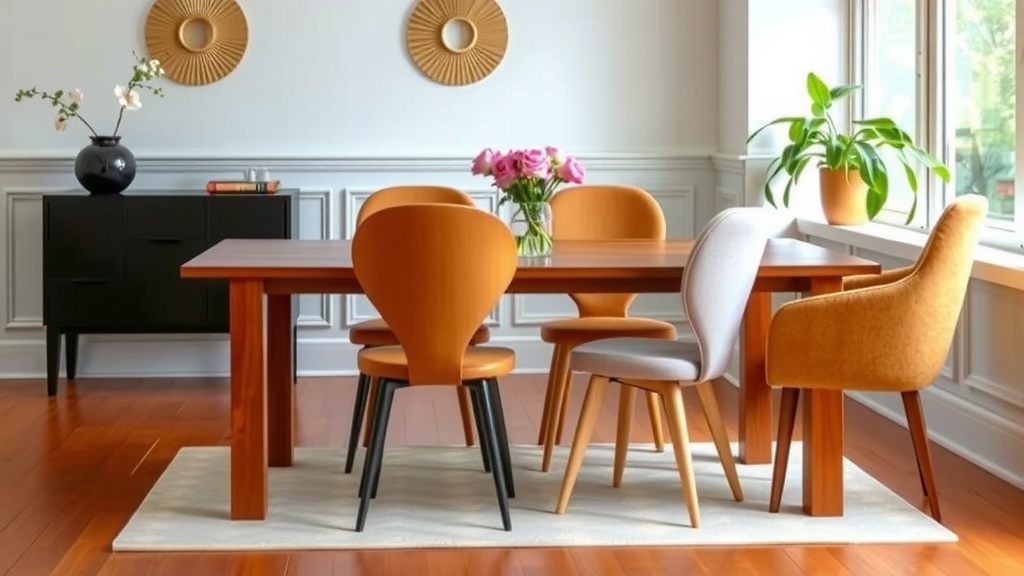
Color is a fantastic unifier. You can pick chairs in completely different styles but in the same color. Think about bold, bright chairs all in a cheerful yellow. Or maybe a collection of sophisticated black chairs, each with a unique design. Even shades of the same color can work. A light blue chair and a navy blue chair can look surprisingly cohesive. Research shows that a consistent color palette can create a sense of order in a visually diverse space (Cornell University). This approach makes your dining area feel planned and stylish.
Material Matters
Using the same material across your chairs is another strong strategy. Imagine a mix of wooden chairs, all made from oak. They could be spindle-back, ladder-back, or even Windsor styles. The wood grain and finish become the unifying factor. Metal chairs can work similarly. A collection of chairs in brushed nickel or matte black, regardless of their shape, will feel connected. We found that consistency in texture adds a layer of richness. It makes the eye appreciate the subtle differences rather than be distracted by them.
Shared Silhouette or Style Era
Sometimes, the shape of the chairs themselves can be the link. All your chairs might have a similar base, like a pedestal or four simple legs. Or perhaps they share a general style, such as mid-century modern or farmhouse. Even if the details differ, the overall form creates a visual rhythm. Many designers suggest selecting chairs that have a comparable height and armrest presence. This helps maintain a balanced look around the table. It prevents one chair from overpowering the others visually.
Strategic Placement and Arrangement
Where you put your chairs is just as important as the chairs themselves. Thoughtful arrangement can guide the eye. It helps create a balanced and appealing dining space. Consider how the chairs interact with each other and the table.
The Head and Foot of the Table Rule
A classic approach is to use two different, often more statement, chairs at the head and foot of the table. The remaining chairs on the sides can then be a simpler, consistent style. These can be more budget-friendly or a neutral design. This creates a focal point at either end. It grounds the entire arrangement. We found this method particularly effective for rectangular tables. It adds a touch of formality without being overly rigid.
Alternating Styles
For round or square tables, consider alternating chair styles. You could have a pair of one style, then a pair of another, all around the table. Or, you might alternate one of Chair Style A, then one of Chair Style B, and repeat. This creates a playful, balanced pattern. Ensure the styles you choose complement each other well. This method works best when the chairs have a similar scale. We’ve seen this technique create a wonderfully eclectic yet harmonious vibe.
Grouping Similar Styles
If you have more than two distinct chair styles, you might want to group them. Place two identical chairs on one side of the table. Then, place two of another style on the opposite side. This creates symmetry within the asymmetry. It breaks up the visual chaos. It’s like organizing a collection of art. Each piece is unique, but displaying them together creates a curated exhibit. This is a great way to incorporate a wider variety of designs.
Comfort and Practicality Checklist
Beyond aesthetics, your dining chairs need to be functional. Your guests will be sitting here, possibly for a while! Here’s a quick rundown to ensure your mixed set is also a comfortable set:
- Test for stability: Ensure all chairs feel sturdy. Wobbling chairs are a no-go.
- Check seat height: All chairs should be roughly the same height for comfortable dining.
- Armrest clearance: Make sure armrests won’t get stuck under the table.
- Cushioning: Consider if some chairs need extra cushions for comfort.
- Back support: Does each chair offer adequate support for the back?
- Ease of movement: Can guests easily get in and out of the chairs?
Conclusion
Mixing dining chairs can transform your space into a stylish and personalized haven. You’ve learned that a single unifying element like color, material, or style is key. Strategic placement, such as using statement chairs at the table’s ends or alternating styles, creates visual harmony. Don’t forget the practical side: ensure all your chosen chairs offer comfort and stability for everyone. Now you’re ready to mix and match with confidence! Start by identifying one unifying element you love and begin searching for chairs that fit your vision.
Frequently Asked Questions
Can I mix chairs that are completely different styles?
Yes, you absolutely can mix very different styles. The trick is to tie them together with a consistent color, material, or even a similar silhouette. This creates a cohesive look even with varied designs. It makes the mix feel intentional rather than accidental.
What if my table is round? Can I still mix chairs?
Mixing chairs works wonderfully with round tables. Consider alternating two different chair styles around the table for a balanced pattern. You could also use a set of one style and add two unique chairs opposite each other. This creates an eclectic yet harmonious feel.
How do I make sure my mismatched chairs look expensive?
Focus on the quality of your chairs and the unifying element. Consistent, high-quality finishes in wood or metal can make a big difference. Ensure chairs are clean and well-maintained. Thoughtful arrangement and ensuring comfort also contribute to a sophisticated appearance.
Is it okay to have chairs with different upholstery?
Mixing upholstery is a great way to add texture and interest. The key is to keep the color palette consistent or choose complementary patterns. If you’re using different fabrics, consider having them all professionally cleaned or reupholstered in coordinating shades. This ensures a polished look.
What’s the easiest way to start mixing dining chairs?
The simplest starting point is often color. Pick two or three chairs you love in the same color but different styles. Then, select a fourth or fifth chair in a complementary neutral tone or a coordinating shade. This provides a strong visual link from the beginning.

![7 Best Upholstery For Dining Room Chairs [2026]](https://seatvit.com/wp-content/uploads/2026/07/7-best-upholstery-for-dining-room-chairs-2026-featured-768x432.jpg)


![7 Best Material To Reupholster Dining Room Chairs [2026]](https://seatvit.com/wp-content/uploads/2026/07/7-best-material-to-reupholster-dining-room-chairs-2026-featured-768x432.jpg)