
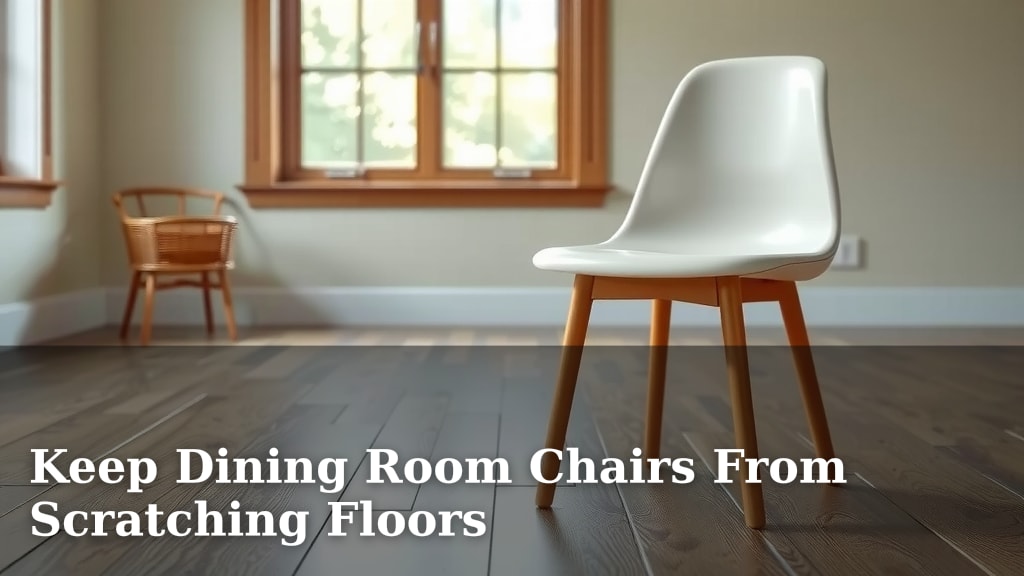
Keep Dining Room Chairs From Scratching Floors
Your beautiful dining room chairs can leave ugly scratches on your floors. The easiest way to keep dining room chairs from scratching floors is to add protective pads to the legs. These pads create a smooth barrier. They help your chairs glide instead of scrape. Simple felt pads are a great starting point.
Protecting your floors means saving money in the long run. You avoid costly repairs or replacement of damaged wood, laminate, or vinyl. We found that even minor scuffs add up. Considering different floor types, like hardwood vs. tile, influences your best option. Think about the weight of your chairs and how often they move.
- Add protective pads to chair legs.
- Use felt, rubber, or silicone options.
- Consider furniture coasters for temporary needs.
- Regularly check and replace worn pads.
- Keep floors clean to avoid grit.
Ready to give your floors a break? Let’s walk through the best ways to stop those chair legs from causing any more floor damage.
Protecting Your Floors From Chair Scratches
Your dining room chairs can unfortunately become little floor-gouging monsters. We’ve all seen those frustrating scratches. They diminish the beauty of your floors. Fortunately, stopping this damage is much simpler than you might think. The main goal is to create a buffer between your chair legs and your floor surface. This barrier lets the chairs glide smoothly.
Understanding the Problem: Why Chairs Scratch Floors
Think about how often you pull out chairs to sit down or push them in. It’s many times a day! Each movement can drag tiny particles of dirt. These act like sandpaper. Even the slightest roughness on the chair leg can cause damage. This is especially true on softer flooring like hardwood. Over time, these small abrasions add up. They create a worn, unattractive look.
The Role of Chair Leg Materials
The material of your chair legs matters. Wood legs can have splinters or rough edges. Metal legs might have small burrs. Even plastic legs can wear down. They can develop sharp points. These imperfections are the main culprits behind floor scratches. It’s not usually the chair itself, but the tiny flaws on its feet.
Different Floor Types, Different Risks
Not all floors react the same way. Hardwood is beautiful but can be more prone to scratches. Laminate flooring can also chip or scratch. Vinyl and linoleum are a bit more forgiving. Tile and stone are generally very durable. However, even these can be scratched by very hard debris trapped under a chair leg. We found that softer floors need the most attention. The heavier the chair and the more often it moves, the greater the risk.
Effective Solutions for Preventing Scratches
The good news is there are many easy ways to protect your floors. These solutions are generally inexpensive. They can save you a lot of money on floor repair. The best approach is usually a combination of methods. We will break down the most effective options for you.
The Power of Chair Leg Protectors
This is the most common and effective solution. Adding something to the bottom of your chair legs creates a smooth surface. This barrier prevents direct contact between the chair and the floor. It’s like putting socks on your chair’s feet!
Felt Pads: The Go-To Option
Felt pads are popular for a reason. They are affordable and easy to find. They stick directly to the bottom of the chair leg. Felt allows chairs to slide easily. Many experts recommend felt for most floor types, especially hardwood. We found that thicker felt pads offer better protection. They can also absorb some noise. Just make sure the surface of the chair leg is clean before applying. This helps the adhesive stick well.
Rubber and Silicone Protectors
These offer a slightly different kind of protection. Rubber or silicone caps slip over the chair leg. They provide a cushioning effect. This is great for preventing both scratches and noise. They can be very durable. However, some people find they can leave marks on certain floors over time. This is less common with high-quality options. Research suggests they work well on tile and linoleum. They can also offer good grip.
Nail-On Glides: A More Permanent Fix
For wooden chairs, nail-on glides are an option. These are usually made of hard plastic or metal. They are hammered directly into the chair leg. This provides a very sturdy and long-lasting solution. However, they require a bit more effort to install. You also need to be careful not to damage the chair leg. Many experts suggest this for heavy-duty use. Be aware that these are not suitable for all chair leg styles.
Temporary and Creative Solutions
Sometimes you need a quick fix. Or perhaps you have a special occasion coming up. There are other options to consider.
Furniture Coasters or “Furniture Shoes”
These are small mats or sleeves that sit under the chair legs. They are great for parties or when you rearrange furniture. They provide immediate protection. You can find them made from various materials. Some are like small rugs, others are made of dense foam. They are easy to put down and take up. We found these to be very convenient for temporary needs. They are also good if you can’t attach anything directly to your chairs.
DIY Solutions: What Works?
Some people try household items. Cardboard or old fabric can work in a pinch. However, these are often not durable. They can wear out quickly. They might even leave their own residue on the floor. For long-term protection, manufactured pads are usually better. We found that consistency is key. A reliable protector applied correctly will serve you best.
Maintaining Your Protectors
Even the best protectors need care. Dirt and debris can get stuck on them. This can defeat the purpose. You should check your chair leg protectors regularly. Many sources recommend doing this monthly. Wipe them clean with a damp cloth. If a protector looks worn or damaged, replace it immediately. Felt pads can become matted or the adhesive can fail. Caps can tear. Replacing them is far cheaper than repairing floors. This simple step helps ensure ongoing protection.
Keeping Your Floors Clean is Key
Your floor’s cleanliness plays a big role. Grit and small stones can get trapped. They will get scraped across your floor. Regularly sweep or vacuum your dining area. This removes potential scratch-causing particles. We found that keeping the floor free of debris is as important as adding protectors. It’s a two-pronged approach for the best results.
Here’s a quick checklist for you:
- Choose the right protector for your chair legs and floor type.
- Clean chair legs thoroughly before applying adhesive pads.
- Check protectors regularly for wear and tear.
- Replace worn or damaged protectors promptly.
- Keep your floors clean to avoid trapped grit.
- Consider temporary coasters for special events.
Conclusion
You’ve learned how easy it is to protect your floors from those pesky dining chair scratches. The key is creating a simple barrier between chair legs and your floors. Whether you choose affordable felt pads, durable rubber caps, or temporary coasters, taking action is simple. We’ve seen that consistent care, like regular cleaning and checking your protectors, makes a big difference. Now, the next step is yours: choose the right protection and apply it to your chairs. Your floors will thank you for it!
Frequently Asked Questions
What’s the best type of floor protector for very heavy chairs?
For heavy chairs, we recommend robust options like thick felt pads or sturdy rubber caps. Nail-on glides can also be a good permanent solution for solid wood legs. These materials offer better weight distribution and durability.
Can furniture pads leave marks on my floors?
Some types of pads, especially certain rubber or silicone ones, might leave marks on delicate flooring over time. It’s a good idea to test a small, inconspicuous area first or opt for high-quality felt pads, which are generally floor-safe.
How often should I check my chair leg protectors?
We found that checking your protectors monthly is a good practice. Look for signs of wear, tear, or accumulated debris. Replacing worn-out pads promptly is essential for continuous protection.
Are DIY floor protectors a good idea?
While household items like cardboard can work in a pinch, they are usually not a durable or reliable long-term solution. They can wear out quickly or even damage your floors. Manufactured protectors are generally a safer and more effective choice.
Will felt pads work on all types of dining chairs?
Felt pads are very versatile and work well on most dining chairs, especially those with flat-bottomed legs. Ensure the leg surface is clean and dry before application for the best adhesion. For oddly shaped legs, you might need to explore other options like chair leg caps.


![7 Best Material For Inserts For Upholstering Dining Chairs [2026]](https://seatvit.com/wp-content/uploads/2026/06/7-best-material-for-inserts-for-upholstering-dining-chairs-2026-featured-768x432.jpg)